Comprehensive Guide To Pressure Vessels: Their Design, Types, and Working
Chemical processes are used in many industries that need to manufacture their own products and create unique solutions. These processes require the support of many chemical equipment components to produce high-quality products. One such example is a pressure vessel, and understanding it carefully before integration into your process is vital. Understanding the pressure vessel manufacturer ensures your manufacturer is reliable and that they comply with engineering standards. Because without it, the chemical process of your production can be disrupted at times, and you will be vulnerable to damage.
Thus, this guide helps you understand what pressure actually is, its work, design, and types, as well as the compliance standards for it. Moreover, you will gain the full knowledge to operate your chemical process effectively and seamlessly with top-quality components and equipment. Let’s dive in to understand each part in clear and definite terms.
What is a Pressure Vessel in a Chemical Process?
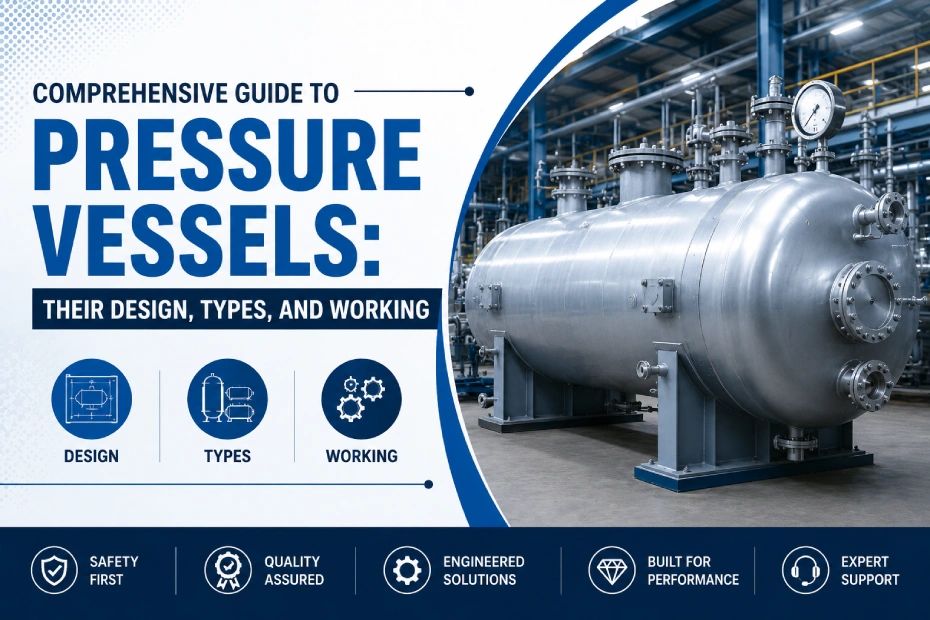
A pressure vessel is a closed, leak-tight specialised container specially designed to store liquids and gases under high pressure. These ensure the transportation and storage of liquids and gases, whether under high or normal atmospheric pressure, are safe in it. A chemical process equipment manufacturer is the one who makes these components, and one such component is a pressure vessel. These are highly regulated to meet strict compliance standards, so they can withstand extreme pressure when required.
Some examples of pressure vessels include boilers, compressed air tanks, chemical reactors, heat exchangers, and propane tanks. These are generally made of steel for ease of storage and processing of materials for projects like powering engines, treating water with dewatering, and more. However, other materials like aluminium or composite materials are also used if any application requires customisation.
How Does a Pressure Vessel Work?
A chemical process equipment manufacturer makes all the components, but the pressure vessel is built to withstand high pressure and temperature. It helps keep gases or liquids secure for the manufacturing of products. The process for how this pressure vessel works includes these steps to ensure effective and safe operation.
1. Design the Vessel
Engineers design the vessel by choosing safe shapes, like cylinders or spheres, to resist extreme pressure. Computer programs help them plan the thick steel walls and sealed ends required for water treatment plants and other high-risk jobs, with added safety measures to prevent leaks and cracks.
2. Fill with Substance
Next, they load the vessel with gases or liquids, like steam for engines or chemicals for refineries. Using special valves and pumps, they carefully regulate the flow and maintain steady pressure to keep from overwhelming the system.
3. Maintain Pressure
The vessel maintains the substance at a high pressure above 15 PSI because of its sturdy steel walls, which prevent leaks. It uses sensors and gauges to monitor pressure and temperature, which alert workers in case something goes out of range, keeping operations safe.
4. Release or Transfer
To use the stored substance, valves release it to power equipment like boilers. Sometimes, it gets heated in heat exchangers to transfer energy for building needs. Safety systems, including relief valves, make sure the release is controlled to avoid any dangerous bursts. This way, everyone stays safe while the work gets done.
Types of Pressure Vessels?
There are several types of pressure vessels available from a pressure vessel manufacturer, each with different properties and features. Below are some common types categorised based on the pressure, geometry and orientation, industrial use, and by structural shape.
1. By Pressure
Based on the pressure, these are the four types of pressure vessels commonly used and seen in construction and manufacturing sites.
| Type | Explanation |
|---|---|
| Storage Vessels | Designed to store liquids, gases, or vapors safely until needed. |
| Process Vessels | Used to carry out chemical reactions, mixing, or separation steps. |
| Heat Exchangers | Facilitate heat transfer between fluids without mixing them. |
| Boilers | Convert liquid into steam for power generation or heating. |
2. By Geometry and Orientation
Based on geometric and orientation needs, these are the four types of pressure vessels commonly used and seen in construction and manufacturing sites.
| Type | Explanation |
|---|---|
| Spherical | Strongest shape with uniform stress distribution, ideal for high-pressure gas storage. |
| Cylindrical | Most common design, economical and versatile, used widely in industry. |
| Vertical | Upright vessels that save floor space and allow efficient mixing or separation. |
| Horizontal | Laid flat, making them easier to clean and better for settling processes. |
3. By Construction
Based on the construction and structural design, these are the four types of pressure vessels commonly used and seen on construction and manufacturing sites.
| Type | Explanation |
|---|---|
| Type 1 – All Metal | Entirely steel/aluminum; strong but heavy. |
| Type 2 – Hoop Wrapped | Metal core with fiber hoop, moderate weight, improved strength. |
| Type 3 – Fully Wrapped | Thin metal liner fully wrapped in fibers, lightweight, high strength. |
| Type 4 – All Carbon Fiber | Plastic liner with carbon fiber wrap, lightest and strongest, but costly. |
4. By Industry Use
Based on industrial application needs, these are the four types of pressure vessels commonly used and seen on construction and manufacturing sites.
| Type | Explanation |
|---|---|
| Construction Vessels | Used in dewatering, tunneling, and compressed air systems. |
| Marine Vessels | Store fuel, steam, or air for ships and submarines. |
| Architectural Vessels | Boilers/heating systems in large buildings. |
| Oil & Gas Vessels | Handle crude oil processing and gas storage under extreme conditions. |
Final Thoughts!
To be safe and have a safe process on site, choosing a pressure vessel manufacturer is highly crucial and a prominent choice to make. Therefore, before you make any investment in setting up a chemical process and think of anything you need, pick your manufacturer. It will help you stock up on chemical process equipment, all in one place, giving you a huge profit margin. Buying in bulk also unlocks additional profit and makes transportation easier and more convenient, but only if you buy from a single manufacturer.
So, if you are setting up, upgrading, or just modifying your chemical process a bit and need a pressure vessel. Then look no further than Kwality Process Equipments Pvt. Ltd, a pressure vessel manufacturer with compliance standards from national to international. So you can purchase without worrying about being charged and quality checks of equipment across the globe. If you are starting out, don’t waste your time thinking more about the manufacturer.
Contact us and talk with our professional experts. They can guide you in setting up the whole process.
FAQs
It depends on your application requirements what’s most suitable. However, the spherical pressure vessels, or even spheres, are generally considered stronger than the other. These store high-pressure fluids because they are structurally sound and, because of their shape, are convenient for storage. The pressure distribution of stresses on both exterior and interior surfaces is even, which leaves no weak points vulnerable to collapse.
Pressure vessels are generally considered more suitable for high-pressure fluids and gases above atmospheric pressure. Due to the presence of Maximum Allowable Operating Pressure (MAOP), their capabilities extend to as high as 150000 PSI. On the other hand, storage tanks hold gases or liquids but only at atmospheric pressure and have an MAOP of 15 PSI.
Yes, using a pressure vessel from a reliable, trusted manufacturer with a decent market presence is safe. As these vessels are designed to be safe, properly tested, and properly maintained, they prevent leaks or explosions in high-pressure jobs.
Yes, definitely. We are all about customising your pressure vessel as per your requirement and process needs. We can customise quickly and securely to the perfect fit for your needs, whether it’s shape, material, or any other requirement. Just let our experts know your process or application demand. They can guide you and help you decide on the design that suits you best.
The pressure vessels, in general, are made to be stronger and more rigid to be safe in different application conditions. However, we as pressure vessel manufacturers ensure the extra rigidity with expert engineering and rigorous testing. This ensures the vessel can withstand extreme pressure and heat for tough tasks across different fields.